A well-placed pergola is one of the simplest ways to add shade, structure and a proper seating area to a garden, and thoughtful landscaping ties it all together. Whether you want somewhere cool to sit on a hot afternoon or a focal point that makes the whole garden feel finished, these pergola ideas cover the styles, materials and shade options that work best.
Below we look at how to choose and position a pergola, what to put underneath it, and projects we have delivered for families across Devon and the wider South West.
In our part of the world a garden gets used the moment the sun comes out, and a pergola makes that space far more comfortable and far more usable. It throws dappled shade over a seating or dining area, gives climbing plants somewhere to grow, and creates a sense of a separate outdoor room without closing the garden in.
A pergola also does something a parasol never can: it defines a zone. By marking out where you sit and eat, it gives the garden structure and a clear focal point, which instantly makes even a simple lawn feel considered and complete.

There is no single right way to use a pergola, and the best choice depends on how you like to spend time outside. Some of the most popular approaches are:
The material you choose sets the look, the upkeep and how long the structure lasts. Here is how the main options compare:
| Material | Look | Maintenance |
|---|---|---|
| Timber | Warm and natural, classic garden feel | Occassional treating or staining |
| Composite | Clean, contemporary, consistent finish | Very low, no treating needed |
| Aluminium/Metal | Slim, modern, minimal frame | Low |
Timber is the traditional favourite and suits almost any garden, especially when built as a sturdy, bespoke structure. We build our pergolas as part of our bespoke landscaping service, so the size, style and finish are designed around your garden rather than pulled off a shelf. Aluminium pergolas are also increasingly popular for a sleek, contemporary look with almost no upkeep, and many come with adjustable louvred roofs.
A pergola is not the only way to take the edge off the midday sun. Depending on your garden and how much cover you want, it is worth considering:
A pergola deserves a proper surface beneath it, both for comfort and to tie the area into the rest of the garden. Composite decking creates a warm, low-maintenance floor that pairs naturally with a timber frame, while a resin bound surface gives a clean, seamless and permeable finish that drains freely after rain.
If the pergola sits beside a lawn, low-maintenance artificial grass keeps the whole area green and usable without the mud and mowing.
Matching the surface to the structure is what makes a seating area feel designed rather than added on.

The finishing touches are what make a pergola look really stylish and turn it into a place you actually want to sit. Slatted side panels or fencing add privacy and shelter from the wind without making the space feel boxed in, while climbing plants soften the frame over time.
After dark, a string of festoon lights or discreet uplighters makes the pergola the natural heart of the garden, and a heater or fire feature extends the season well into the cooler months. For more on creating a sociable garden, our outdoor entertaining space ideas and year-round alfresco guides are a good place to start.
A pergola is a structure as much as a feature, so a little planning goes a long way. A few things worth thinking about before you start:
For more inspiration on designing a garden together, our landscape design ideas are well worth a read.
A pergola is a simple structure, but a few common mistakes can stop it living up to its potential. The ones we see most often are:
Getting the size, position and build right from the start is what separates a pergola that lasts from one that disappoints, which is why we design and build each one to suit the specific garden.
The best way to picture what is possible is to look at shade and seating projects we have completed for real customers across the South West, including Exeter and Torquay.
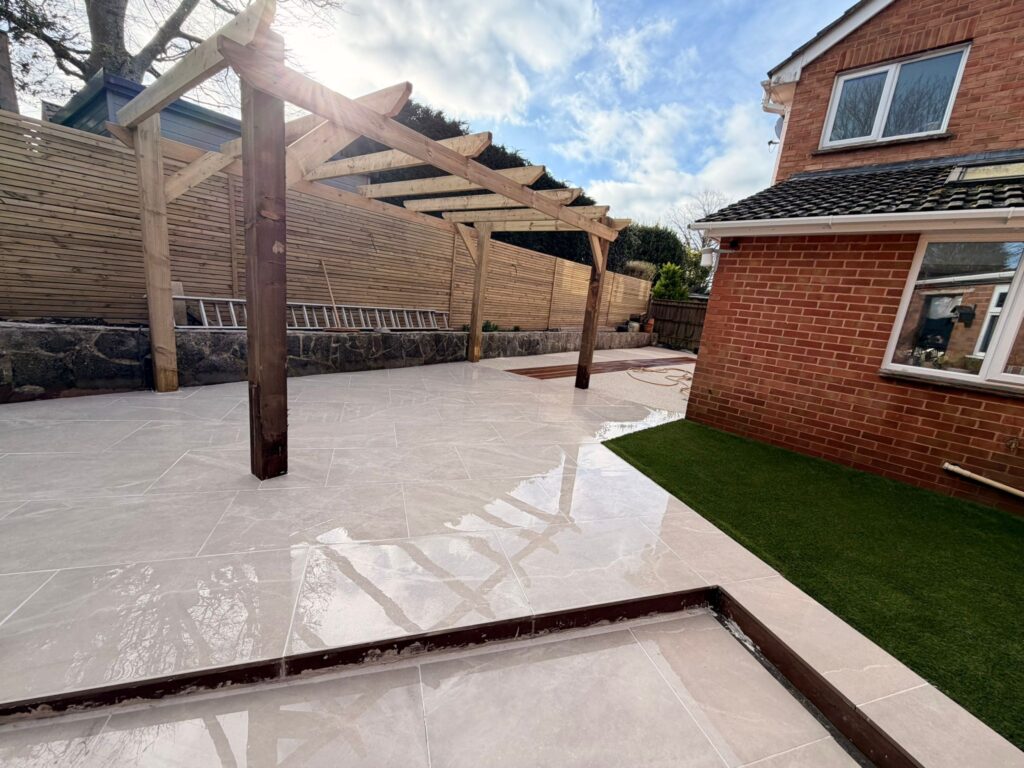
As part of a full garden transformation in Exeter, we designed and built a bespoke structural timber pergola with dark-stained uprights and natural overhead beams, alongside a substantial covered outdoor room with a solid pitched roof. Together they give the family both dappled shade and fully sheltered space they can use whatever the Devon weather is doing.
The pergola anchors the garden as a striking focal point, while the covered room has genuinely changed how the family use their home. You can read the full multi-zone garden transformation case study for more information.

On a sloping seafront garden in South Devon, the owners wanted to make far more of their sea views. We landscaped the slope into manageable turfed tiers with a central porcelain pathway, an alfresco dining area at the bottom, and a gazebo seating space positioned to overlook the seascape.
The gazebo gives a sheltered spot to sit and take in the view, and shows how a roofed shade structure can become the highlight of a garden. See the full seafront garden landscaping case study to see how it came together.
A pergola is one of the most satisfying additions you can make to a garden, giving you shade, structure and a proper place to sit and entertain. Our family-run team designs and builds each one bespoke, matched to your garden and tied in with the surface, planting and lighting around it. We design and build pergolas as part of our landscaping across Devon, including Exeter, Torquay and Newton Abbot.
To book a free, no-obligation site visit across the South West, email us at info@outdoorhomeimprovements.co.uk or send us your details through our contact page and we will be happy to help.
Most domestic pergolas fall under permitted development and do not need planning permission, provided they sit within height limits and are not built forward of the front of the house. There are exceptions, for example in listed buildings or conservation areas, so it is always worth checking. Our guide on whether you need planning permission to landscape your garden explains the rules in more detail.
Timber is the most popular choice for its warm, natural look and versatility, especially when built as a sturdy bespoke structure. Composite and metal are good low-maintenance alternatives. The right choice depends on the style of your garden and how much upkeep you want.
A pergola has an open framework of beams that casts dappled shade, while a gazebo has a solid roof that provides full shelter from sun and rain. A pergola suits a sunny seating or dining area, whereas a gazebo is ideal where you want a sheltered spot to use in any weather.
You can train climbing plants over the beams for natural, scented shade, or fit a retractable canopy, sail shade or slatted roof for more cover. Underfoot, composite decking, resin bound surfacing or paving all make a comfortable, low-maintenance base for your seating.
If a full pergola is not right for your space, a gazebo, a retractable awning, a sail shade or even a simple parasol will all add shade, while a covered outdoor room gives full shelter from sun and rain. We can talk through the best option for your garden during a free site visit.


