Taking a weekend to prepare your garden for winter now saves a surprising amount of time, money and disappointment come spring. A few hours spent on decking, patios, fences and drainage in October stops frost, wind and heavy rain from turning small problems into big repairs, and a little work on the planting means the garden still looks cared for on the greyest days. If you would rather leave the bigger jobs to a team that does this every day, our garden landscaping service covers everything from repairs to full renovations.
This checklist walks through the jobs that matter most for South West gardens, where mild but very wet winters, coastal winds and the odd hard frost all take their toll, so you know exactly what to tackle and when.
The short answer is protection. Before winter, give exposed timber a fresh coat of treatment, spread a thick layer of mulch or compost over bare borders to insulate roots and feed the soil, and wrap or move tender plants in pots. On hard surfaces, a good clean and a check for gaps or loose joints is worth far more than any product you can buy.
The aim is simple: keep water draining away, keep timber sealed, and keep the soil and roots covered so frost cannot get a grip. Get those three things right and most gardens come through the winter with very little damage.
Use the table below as your October and November job list. Most of it is quick, and doing it in the right order means you are not undoing your own work.
| Job | When | Why it matters |
|---|---|---|
| Clean and treat timber decking | Early October, on a dry day | Stops algae and slippery boards, seals the timber |
| Jet wash patios and paths | October | Removes moss and grime before it sets in |
| Check fences and posts | Before the autumn storms | Loose panels fail first in high winds |
| Clear gutters, gullies and drains | After most leaves have fallen | Prevents pooling, flooding and washout |
| Mulch borders | October to November | Insulates roots and improves the soil |
| Protect pots and tender plants | Before the first frost | Prevents cracked pots and frost-killed plants |
| Store or cover garden furniture | Late October | Avoids weathering and rust |
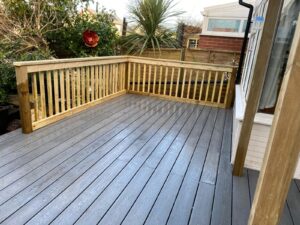
Decking takes more punishment over winter than almost any other part of the garden. Fallen leaves trap moisture against the boards, algae makes them treacherous underfoot, and untreated timber soaks up water and starts to soften. Sweep the boards, scrub or jet wash on a gentle setting, then apply a decking treatment or oil once the surface is fully dry.
Clear the gaps between boards so water can drain through, and check for loose screws or soft spots near the edges. Composite boards need far less fuss, just a wash, which is one reason so many homeowners are switching to low-maintenance decking. If your steps or boards are already green and slick, our guide on How To Fix Slippery Garden Steps has practical fixes.
Moss and weeds in joints are much easier to deal with now than in March. Jet wash paving and paths, brush out the joints, and re-point any gaps where water could get in and freeze. Water that sits in a crack expands as it freezes, and over a few cold snaps that is how slabs lift and edges crumble.
A permeable surface such as a resin bound patio is far more forgiving, as rain drains straight through rather than sitting on top. It only needs an occasional sweep and wash to look its best all winter.

Autumn storms find every weakness. Walk the boundary and push gently on each panel and post: anything that rocks, has rotted at the base or has a split rail is a candidate for repair now, before a gale brings it down onto plants, cars or a neighbour’s garden. Oil gate hinges, tighten latches, and cut back climbers that are pulling at panels.
If panels are past saving, replacing them before the worst weather arrives is much easier than clearing up afterwards. Quality garden fencing set on sound posts will ride out a South West winter with ease.

Our winters are wet rather than freezing, so drainage is the job that pays off most. Clear leaves from gutters, gullies and channel drains, check that downpipes discharge where they should, and look for the low spots where puddles always collect after rain. Those are the areas most likely to turn boggy or wash out over the coming months.
If water regularly sits on the lawn or against the house, it is worth tackling properly rather than living with it. Our guide to Garden Drainage explains the causes and the long-term fixes.
There is no need to cut everything to the ground. Cut back perennials that have collapsed or gone mushy, and anything showing disease, but leave sturdy seed heads and grasses standing until early spring. They look striking with a frost on them, shelter beneficial insects and feed birds through the lean months.
Prune climbing roses and tie in long stems so the wind cannot whip them about, lift and store tender bulbs, and move potted plants close to the house or wrap pots to stop them cracking. The RHS has helpful guidance on preventing winter damage to plants.
Give a real lawn a final high cut, rake out moss and thatch, and aerate compacted areas with a fork so water can drain. After that, keep off it as much as possible when it is waterlogged or frozen, as footfall on wet or frosty grass damages it for months.
If you are tired of a muddy, worn lawn every winter, artificial grass is worth considering. A quick brush to clear leaves is all it needs, and it stays green and usable all year.
We help homeowners across Devon and Cornwall get their gardens ready for every season, from small repairs to complete low-maintenance makeovers.
In Bodmin, we replaced a tired lawn with a neat artificial grass installation and clean borders, giving the family a green, mud-free garden that looks after itself through the winter. Read the full Beautiful Artificial Grass Installation in Bodmin, or browse more work in our case studies.

October is ideal in the South West. The weather is usually still dry enough to treat timber and clean paving, and you can get drainage and fencing sorted before the autumn storms and first frosts arrive.
Yes. Store cushions indoors, and either bring furniture into a shed or garage or use breathable, fitted covers. This prevents rot, rust and mould and makes it last for many more seasons.
You can, but choose a dry, mild day and use a gentle setting with the lance held well back. Treat timber only once it is completely dry, which is why early autumn is the best window.
A little preparation now means a garden that comes through winter in great shape and is ready to enjoy the moment spring arrives. If you have repairs that need doing, a fence that will not survive another storm, or you are thinking about a lower-maintenance garden altogether, our in-house team can help.
To book a free, no-obligation site visit, email us at info@outdoorhomeimprovements.co.uk or send us your details through our contact form.


