The right garden path ideas do more than get you from A to B. A well-placed path adds structure, guides the eye, keeps feet dry and mud-free through winter, and can completely lift the look of a garden. Whether you want a smooth, all-weather route or an informal trail through the borders, the material and design you choose make all the difference, and quality resin pathways are just one of many options.
This guide runs through the best path materials, what they cost, low-maintenance and budget options, design tips, and when it is worth calling in a professional.

A path is one of the hardest-working features in any garden. It provides safe, dry access in all weathers, protects the lawn from being worn into a muddy line, and links different areas into one considered space.
Done well, it also adds real character, whether that is a crisp, modern walkway or a meandering stone trail. Get the route and materials right and a path earns its keep every day of the year.
The material sets the look, the cost and how much upkeep your path will need. Here is how the most popular choices compare.
| Material | Cost | Maintenance | Best for |
|---|---|---|---|
| Resin bound | Mid to high | Very low | Smooth, permeable, all-weather paths |
| Gravel | Low | Low to medium | Budget, informal, free-draining routes |
| Natural stone or paving | Higher | Low | Premium, formal gardens |
| Stepping stones | Low | Low | Informal paths through a lawn |
| Bark or wood chip | Very low | Higher | Woodland and temporary paths |

For the lowest cost, gravel, bark or a run of stepping stones set into the lawn are hard to beat. They need little more than a weed membrane and an edge to keep them tidy, and you can often lay them yourself.
Bear in mind the cheapest option is not always the best value over time. Loose materials scatter and need topping up, so for a busy, permanent route a slightly higher upfront spend on a harder surface often pays off.
If you would rather not spend weekends weeding and re-levelling, a bound surface is the way to go. A resin bound path gives a smooth, joint-free finish that is permeable, weed-resistant and stays put underfoot, which is why it is so popular for front paths and main routes.
Because it lets water soak through, it also helps with drainage, and it is worth checking the government guidance on permeable surfacing for front gardens. For more on the material, see our guide to the Benefits Of Resin Pathways.

A path across a lawn should feel natural and be kind to the mower. Stepping stones or flagstones set flush with the grass let you cross without wearing a muddy track, while a narrow paved or resin ribbon gives a firmer, all-weather route.
Set stones a comfortable stride apart and just below the grass line so the mower glides straight over them.
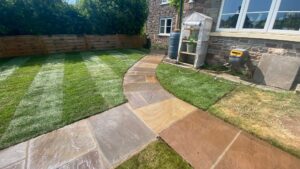
Get the practicalities right and a path works beautifully for years. As a rough guide, a main path wants to be at least 90cm wide so two people can pass or a wheelbarrow can get through, while a secondary path can be narrower.
Gentle curves feel more relaxed than straight lines and make a garden seem larger, a slight fall to one side sheds rainwater, and a non-slip surface with a solid edge keeps things safe and tidy. Good landscaping ties the path in with levels, planting and drainage.
Whatever the surface, a lasting path starts underground. The basic steps are to mark out the route, excavate to the right depth, lay and compact a stone sub-base, add edging to hold everything in place, then finish with your chosen surface.
Loose materials like gravel and stepping stones are within reach of a confident DIYer. Bound surfaces such as resin and laid paving need a properly prepared, well-drained base to last, which is where they benefit from professional installation.
If your path needs to deal with a slope, poor drainage or a lot of foot traffic, or you want a flawless resin or paved finish, it is worth bringing in a professional. The groundwork and falls are what make the difference between a path that lasts and one that sinks or floods.
Our team designs and installs paths of every kind across the region, including full landscaping in Devon. If drainage is a worry, our guide to Garden Drainage is a useful read too.
We install garden and community paths throughout the South West, from private gardens to public spaces.
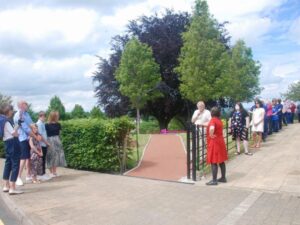
At South Petherton Hospital, we laid a smooth, wheelchair-friendly resin bound pathway that transformed access to the grounds and was officially opened by the community. See the full South Petherton pathway project, or browse more work in our case studies.
Gravel, bark or stepping stones set into the lawn are the cheapest options, needing only a weed membrane and edging. They are easy to lay yourself, though loose materials need occasional topping up.
Stepping stones through a lawn, a simple gravel route with timber edging, or a straight run of paving slabs are all quick to create and suit most gardens with minimal fuss.
Mark out the route, excavate, lay and compact a stone sub-base, add edging, then finish with your chosen surface. Loose surfaces are DIY-friendly, while resin and paving need a proper base and are best installed professionally.
A resin bound path is one of the lowest-maintenance choices, as it is smooth, permeable and resists weeds, needing little more than an occasional wash to stay looking its best.
Whether you want a smart resin walkway, natural stone or a simple stepping-stone trail, we can help you design and lay a path that looks great and lasts. From front paths to full garden transformations, our team handles it all.
Get in touch through our contact page or email us at info@outdoorhomeimprovements.co.uk to arrange a site visit.


