Garden landscaping trends for 2027 are being shaped by wetter winters, drier summers and a growing wish for outdoor spaces that work harder for the people who use them. As a family-run garden landscaping team based in Newton Abbot, we see these changes first hand on projects across Devon and the South West, from compact town gardens to large coastal properties.
In this guide, we look at the trends shaping garden design this year, what they look like in practice, and how to bring them into your own outdoor space. Whether you are planning a full transformation or a few well-chosen upgrades, these ideas will help your garden look good and stay practical for years to come.
The biggest garden trends for 2027 share a common thread: gardens that cope with changing weather, support wildlife and are easy to live with. Rather than chasing one fashionable look, homeowners are choosing layouts and materials that balance style with resilience and low upkeep, so the garden still looks its best several years down the line.
Here is a quick overview of the main trends and how they translate into real garden features:
| Trend | What it looks like | Features to consider |
|---|---|---|
| Climate-resilient gardens | Spaces that drain well in heavy rain and cope with dry spells | Permeable resin, drought-tolerant planting, artificial grass |
| Wildlife-friendly planting | Native hedging, pollinator borders and small meadow areas | Mixed borders, native shrubs, wildflower patches |
| Natural materials | Softer edges, textured stone and timber | Gravel, timber sleepers, natural stone paving |
| Wellbeing gardens | Calm, restorative spaces to switch off in | Sheltered seating, scented planting, soft lighting |
| Zoned outdoor living | Separate areas for dining, relaxing and play | Pergolas, decking, patios, garden lighting |
| Grow your own | Edible plants built into the design | Raised beds, herb borders, compact fruit trees |
| Low maintenance | Clean layouts that free up your weekends | Composite decking and fencing, resin paths |
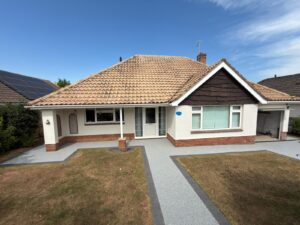
After a run of storms, flooding and summer heatwaves, more homeowners want a garden that can handle whatever the weather brings. The Royal Horticultural Society’s research on gardening in a changing climate points to extreme weather as the most likely pattern for UK gardens, which makes drainage and plant choice more important than ever.
In practice, that means fully permeable surfaces such as resin bound pathways, which let rainwater drain straight through rather than pooling or running off. It also means hardy, drought-tolerant plants like lavender, rosemary and ornamental grasses, and artificial grass in areas where a natural lawn struggles with waterlogging in winter or scorching in summer.
Biodiversity has moved from a niche interest to a central part of garden design. Native hedging, pollinator-friendly borders and small wildflower areas are now being built into gardens of every size, often right alongside structured patios and paths. Choosing plants that flower at different times of year gives bees and butterflies a steady food source from spring through to autumn, and brings colour to the garden for longer.
With so much of daily life spent in front of screens, more homeowners want a garden that helps them slow down and switch off. That means sheltered seating nooks, scented and textured planting, the sound of water or rustling grasses, and spaces that invite you outside for a few quiet minutes each day. Sensory touches like these work in family gardens too, giving children somewhere to explore as well as play.
Hard landscaping is not going anywhere, but 2027 favours a better balance between hard and soft features. Expect textured natural stone, timber sleepers and gravel to sit alongside generous planting, with edges softened so the garden feels relaxed rather than overly manicured. It is a look that suits Devon’s rural and coastal settings particularly well.

The garden is increasingly treated as an extra room of the house, so many layouts now divide the space into clear zones for dining, relaxing, play and storage. A timber pergola over a patio creates a sheltered spot for meals outdoors, while composite decking can define a raised seating area or link the house to the lawn. Soft garden lighting then lets you enjoy each zone well into the evening.
Zoning works just as well in smaller spaces. Even a narrow town garden can fit a compact seating area and a planted border when the layout is planned carefully from the start, with each area given a clear purpose.
Rising food costs have kept the grow your own movement going strong, but the 2027 twist is that edible plants are now part of the design rather than tucked away at the bottom of the garden. Raised timber sleeper beds, herb borders beside the patio and compact fruit trees all add interest while giving you something to harvest. Building raised beds into the landscaping from day one keeps them looking tidy and makes them far easier to tend.
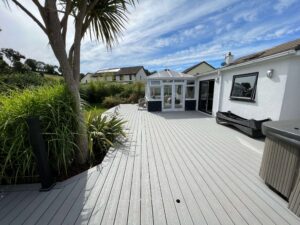
Busy households want a garden they can enjoy rather than one that takes up every weekend. The most low-maintenance designs keep the layout simple, use durable materials and limit the amount of lawn and planting that needs regular attention. Popular choices this year include:
Combined with a 10-year guarantee on products and workmanship, these materials mean less upkeep and more time spent actually using your garden.
Here are a few recent projects from our team that show this year’s trends in real Devon gardens.

A neglected rear garden in Exeter became a multi-zone outdoor living space, with a polished porcelain patio, a bespoke timber pergola, a covered outdoor room, resin bound surfacing and an artificial grass lawn for the children. See the full project in Stunning Multi-Zone Garden Transformation in Exeter.
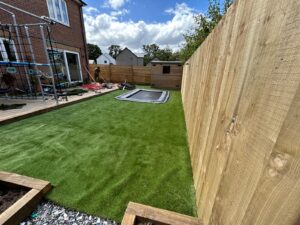
This family garden was designed around play, with an in ground trampoline set flush into artificial grass, bonded rubber safety surfacing, decorative aggregate beds and raised sleeper planters for hands-on planting. See the full project in A Bespoke Sensory Garden With Safe Play Surfacing.
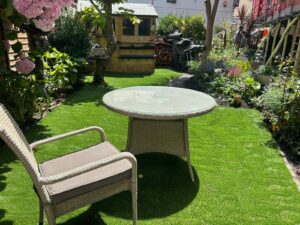
In a long, shaded town garden, we replaced old concrete and worn paving with artificial grass, shaped neatly around the customer’s established borders to create a green garden room that needs almost no upkeep. See the full project in Low Maintenance Artificial Grass Teignmouth Town Garden.
You can see more of our work on our case studies page.
The trends shaping gardens this year all point the same way: outdoor spaces that cope with the weather, welcome wildlife and fit around busy lives. From permeable resin paths and composite decking to zoned living areas and raised beds, the right mix of features will depend on your garden, your budget and how you want to use it. Our in-house team will talk through the options with you and design a layout that works for the space you have.
To book a free, no-obligation site visit, email us at info@outdoorhomeimprovements.co.uk or send us your details through our contact form.
A well-landscaped garden can make a strong first impression on buyers, particularly when it offers usable outdoor living space and low-maintenance features. Tidy, durable surfaces such as resin bound paths and composite decking help a property present well without leaving the next owners with lots of upkeep.
Many projects can go ahead all year round, as hard landscaping such as decking, fencing and paving is not tied to the growing season. Planning in autumn or winter is often a good idea, as it means your new garden is ready to enjoy by spring and summer.
Yes. Zoning, vertical planting, raised beds and low-maintenance surfaces all work well in compact spaces. The key is planning the layout carefully so each area has a clear purpose and the garden feels open rather than cluttered.


