A coastal garden can be one of the most rewarding outdoor spaces to own. The light, the sea air and those long views across the water are hard to beat, especially at a second home in Devon or elsewhere along the Southwest coast, and the right garden landscaping makes the most of all three.
Those same conditions also bring challenges. Salt-laden wind, exposure and unpredictable drainage all shape what will thrive and what will struggle.
These coastal garden ideas cover planting, screening, surfaces and low-maintenance design, so your garden looks its best with as little upkeep as possible.
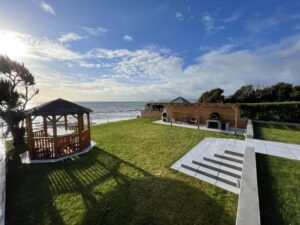
A coastal garden is any outdoor space close enough to the sea to be affected by salt spray, strong onshore wind and bright, exposed conditions. In practice that covers gardens along the cliffs and estuaries of Devon, Cornwall, Somerset and Dorset, as well as more sheltered gardens a little inland that still catch the salt air.
The trick is to work with these conditions rather than against them. Shelter, tough surfaces and salt-tolerant planting turn an exposed garden into a space you can actually relax in.
Before you choose plants or paving, it helps to understand what a coastal site throws at you. The main pressures are:
Good coastal design tackles all five together, and it starts with shelter.
Start by working out where the wind comes from and where you want to sit. On most Southwest gardens the best views and the strongest wind arrive from the same direction, so the aim is to filter the wind without blocking the outlook.
Break the garden into zones: a sheltered seating area near the house, a more open lawn or terrace for the view, and tougher, low-care planting on the most exposed edges. A considered landscaping plan ties these zones together and keeps levels, paths and drainage working as one.
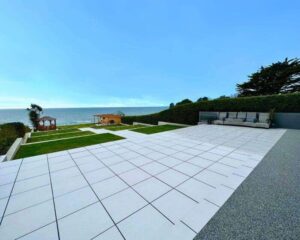
Shelter is the single biggest factor in a comfortable coastal garden. A solid wall creates turbulence on the leeward side, so the best windbreaks filter the wind rather than stopping it dead.
Slatted or hit-and-miss fencing works well, letting some air through while cutting the force of the gusts. Pair it with a salt-tolerant hedge or hardy shrubs and you gain privacy as well as protection, which matters when a second home overlooks a busy coast path.
Lawns can struggle on salty, exposed ground, so hard landscaping often does the heavy lifting in a coastal garden. The right surface needs to shrug off salt, drain quickly after storms and cope with wind-blown sand and grit.
A permeable resin bound patio is a strong choice, as it lets water soak away rather than pooling, and its smooth, joint-free finish gives salt and weeds nowhere to take hold. Gravel and natural stone also perform well over a free-draining base. If you are paving a large area near the house, it is worth checking the government guidance on permeable surfacing to keep drainage compliant.
| Surface | Drainage | Salt resistance | Maintenance |
|---|---|---|---|
| Resin bound | Excellent (permeable) | High | Low |
| Gravel | Very good | High | Low, occasional top-up |
| Natural stone | Good with drainage | High | Medium |
| Artificial grass | Very good | High | Very low |
Coastal planting needs to handle salt, wind and quick-draining soil. Reliable performers include ornamental grasses such as festuca and miscanthus, silver-leaved plants like lavender, santolina and sea holly, and tough evergreens such as griselinia, escallonia and hebe for structure and shelter.
Group plants so the toughest sit on the windward edge and more tender favourites shelter behind them. Once your framework is in, our guide to the Best Plants For Autumn Colour has ideas that also suit milder coastal spots.
The view is the reason most people garden by the coast, so design around it. A raised deck lifts seating to catch the outlook and copes well with sloping estuary and clifftop gardens.
Composite decking is ideal here, as it resists salt and damp and needs almost no upkeep, while frameless glass balustrades keep sightlines open. For more on levels and layouts, see our Raised Decking Ideas.
If your coastal property is a holiday let or second home, you want a garden that looks after itself between visits. Low-maintenance coastal garden ideas centre on tough surfaces and planting that cope without weekly attention.
Artificial grass stays green and tidy whatever the weather and never needs mowing, which makes it popular for second homes. Combined with resin surfaces and evergreen structure, it keeps things effortless. For nearby projects, our team offers full landscaping in Devon, and you can find more compact planting ideas in our Low-Maintenance Front Garden Ideas guide.
We have transformed a number of exposed coastal gardens across the Southwest. Here are two recent examples.
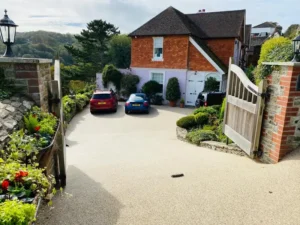
In Salcombe, we installed a permeable resin bound driveway and parking area for a home overlooking the estuary. The joint-free finish copes easily with salt and heavy rain, and it has lifted the whole frontage. See the full Salcombe coastal driveway project.
Near the Braunton estuary, we built a composite decking balcony with glass balustrades to make the most of sweeping water views, using low-maintenance materials that shrug off the coastal climate. Take a look at the Braunton decking balcony project, or browse more work in our case studies.

Permeable resin bound paving and artificial grass are the easiest to look after. Both drain quickly, resist salt and need very little upkeep, which suits exposed gardens and second homes that are left for weeks at a time.
Use windbreaks that filter rather than block the wind, such as slatted fencing and salt-tolerant hedging. Filtering the gusts reduces turbulence and creates sheltered pockets where planting and seating can survive.
Tough, salt-tolerant choices include griselinia, escallonia, hebe, lavender, santolina, sea holly and ornamental grasses. Place the hardiest plants on the windward edge to shelter anything more tender behind them.
Most garden landscaping falls under permitted development, but large areas of hard surfacing, height changes and coastal locations can have extra rules. It is always worth checking with your local authority before major work begins.
Whether you are starting from bare ground or reworking a tired garden, we can help you design a coastal garden that stands up to the elements and makes the most of your view. From screening and surfaces to full garden transformations, our team handles it all.
Get in touch through our contact page or email us at info@outdoorhomeimprovements.co.uk to talk through your ideas and arrange a site visit.


